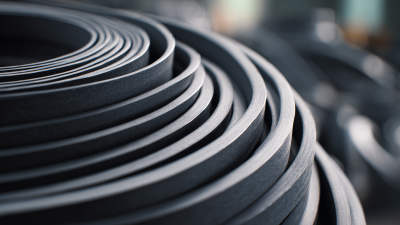
Picking the right Fluorocarbon Rubber can honestly feel a bit overwhelming at first. It’s this really specialized material, and it’s prized for its great chemical resistance and ability to handle high temps. But here’s the thing—different jobs mean different needs. With so many options out there, it’s super important to choose wisely to make sure you get something durable and effective.
Take a moment to really think about what you need it for. Are you working in aerospace, automotive, or somewhere else? Every industry has its own set of requirements, and understanding those can make all the difference in your choice. Also, don’t forget—quality definitely counts. It pays to go with trusted brands like DuPont or 3M, since they’ve got a solid reputation and loads of experience. Their products can steer you toward the best pick.
But hey, keep in mind, even top-notch products might need some tweaking. Always compare your specific needs with the material’s features—if they don’t match up, you could run into performance hiccups. So, chatting with industry pros or experts can really help; they can offer insights and recommendations customized for your situation. Better safe than sorry, right?

Understanding Fluorocarbon Rubber: Properties and Applications
Fluorocarbon rubber is known for its exceptional properties. It is resistant to heat, chemicals, and aging. This makes it ideal for various applications in demanding industries. For instance, seals made from this material can withstand extreme temperatures, making them reliable for automotive use. Engineers often choose fluorocarbon rubber for its ability to maintain performance in tough environments.
Understanding the specific needs of your application is crucial. Not all fluorocarbon rubbers are created equal. Variations in composition can lead to differences in flexibility and durability. Choosing the wrong type might result in premature failure. When selecting fluorocarbon rubber, consider factors like temperature range, resistance to specific chemicals, and physical stress.
Some might overlook the importance of testing. Real-life conditions can differ significantly from theoretical assumptions. Conducting practical tests ensures that the selected rubber meets your requirements. This step might seem tedious but is vital. It is important to balance performance with cost-effectiveness. Ultimately, the right choice depends on thorough evaluation and understanding of the application context.
Types of Fluorocarbon Rubber: A Comparative Overview
Fluorocarbon rubber, known for its resistance to heat and chemicals, is essential in numerous industries. It comes in various types, each tailored for specific applications. The common types include FKM, FFKM, and FVMQ. Each variant has distinct properties, making them suitable for specific environments.
FKM, or fluorocarbon elastomer, excels in high-temperature applications, with a service range up to 200°C. It is widely used in seals, gaskets, and O-rings. On the other hand, FFKM offers superior chemical resistance and can withstand aggressive substances like acids and solvents. This particular type remains effective in challenging environments, with some grades able to endure temperatures up to 300°C. However, FFKM can be more expensive, requiring careful consideration when cost is a factor.
FVMQ, fluorinated methyl siloxane rubber, is another variant. It demonstrates excellent thermal stability and elasticity, often preferred in medical applications. The right selection ultimately hinges on the specific requirements of your project. Manufacturers frequently report that mismatches between rubber types and environmental conditions lead to premature failure, emphasizing the importance of thorough evaluations. Selecting the correct fluorocarbon rubber can seem daunting, but understanding the distinctive attributes of each type can ease this process.
Assessing Temperature and Chemical Resistance for Your Needs
When selecting fluorocarbon rubber, assessing temperature and chemical resistance is crucial. Fluorocarbon rubber offers excellent resilience in harsh environments. However, not all grades perform the same under different conditions. It’s essential to identify the specific temperature range your application requires. Continuous exposure to high temperatures can weaken rubber. On the other hand, low temperatures may compromise flexibility.
Chemical resistance is another significant factor to consider. Different applications expose materials to various chemicals. Not all fluorocarbon rubbers can withstand strong acids or bases. Testing under actual conditions is advisable. This can provide insight into how a rubber grade performs. Consider conducting controlled experiments to verify the rubber’s durability against the chemicals it will encounter.
Reflect on your needs and expectations. Sometimes, the best option isn't the most expensive one. Lower-grade fluorocarbon rubber might suffice for less demanding applications. Take time to review all available options before making a choice. Your decision should prioritize both effectiveness and cost-efficiency. Understanding your unique requirements will ultimately lead to a more precise selection process.
Evaluating Mechanical Properties of Fluorocarbon Rubber
When selecting fluorocarbon rubber, understanding its mechanical properties is crucial. This material is known for its remarkable heat resistance and chemical stability. According to industry reports, fluorocarbon rubbers can withstand temperatures ranging from -20°C to 250°C, making them suitable for harsh environments.
The tensile strength of fluorocarbon rubber typically varies between 14 to 28 MPa. This range means it can tolerate significant stress without permanent deformation. However, not all grades perform equally. For instance, some formulations may exhibit lower elongation at break, sometimes under 150%. Thus, it’s essential to evaluate the specific requirements of your application.
Moreover, while fluorocarbon rubber is highly resilient, its hardness can impact its overall performance. Shore A hardness can range from 60 to 90. Softer materials offer better flexibility, while harder grades provide superior wear resistance. Analysts often recommend testing various samples to assess their comfort under specific loads and temperatures. Such hands-on evaluations can reveal nuances that data alone might not capture, highlighting the importance of practical experience in material selection.
Applications in Industry: Choosing Based on Use Cases
When selecting fluorocarbon rubber, understanding its applications is crucial. Industries utilize this material for its durability and resistance to extreme conditions. For instance, automotive sectors appreciate its resilience to thermal variations. According to a 2022 industry report, the demand for fluorocarbon rubber in automotive applications increased by 15%. This highlights its importance in high-performance environments.
In the aerospace industry, fluorocarbon rubber plays a vital role in sealants and gaskets. These components require materials that can endure high pressure and temperature fluctuations. A recent study found that 35% of aerospace manufacturers prioritize fluorocarbon rubber over other elastomers for its reliability.
**Tip:** Always assess the specific environmental conditions your application demands. This helps narrow down your choices effectively.
Moreover, in chemical processing, the compatibility of fluorocarbon rubber with aggressive fluids is a key consideration. A report indicated that 40% of chemical plants upgraded to fluorocarbon-based solutions due to improved longevity. This shift shows an industry trend towards safer and more reliable materials.
**Tip:** Evaluate past failures when choosing materials. Understanding shortcomings can steer you towards better decisions.
How to Choose the Right Fluorocarbon Rubber for Your Needs? - Applications in Industry
| Application |
Temperature Range (°C) |
Chemical Resistance |
Durability |
Common Use Cases |
| Automotive |
-40 to 200 |
Excellent |
High |
Seals, gaskets, hoses |
| Aerospace |
-54 to 232 |
Outstanding |
Very High |
Fuel seals, insulation |
| Chemical Processing |
-40 to 260 |
Excellent |
High |
Lining materials, seals |
| Food & Beverage |
-30 to 150 |
Good |
Moderate |
Seals, food processing equipment |
| Electrical Insulation |
-40 to 180 |
Good |
High |
Cables, connectors |
Cost Considerations: Budgeting for Fluorocarbon Rubber Selection
When selecting fluorocarbon rubber, cost is a significant factor. Price variations often reflect performance characteristics, such as temperature resistance and chemical stability. Understanding your budget is crucial, as it influences the quality and suitability of the material. Low-cost options may seem appealing but can lead to higher long-term costs.
Consider the specific application for the rubber. Different industries have unique requirements. For instance, high-performance applications may justify a higher initial investment. However, for less demanding tasks, a more economical choice could suffice. It’s essential to weigh immediate costs against potential maintenance or replacement expenses.
Additionally, always account for the total cost of ownership. Shipping, installation, and operational efficiency all play a role in the overall budget. Analyzing these details might reveal surprising insights. Sometimes, opting for cheaper alternatives can lead to unforeseen complications. Balancing cost and performance requires careful consideration. Each decision impacts your project’s success.
Sourcing and Certification: Finding Quality Suppliers
Finding a quality supplier for fluorocarbon rubber is crucial. Start by assessing potential suppliers' certifications. Look for quality standards such as ISO certifications. These indicate adherence to rigorous manufacturing processes. It’s essential to verify that they meet industry specifications.
Consider their experience in the field. Suppliers with a long-standing presence often have a better understanding of the market. They can provide insights into what types of fluorocarbon rubber would suit your specific needs. Engaging with them directly can also help establish trust. Ask for case studies or client testimonials to gauge their reliability.
Quality assurance checks can be elusive. Many suppliers promise high standards, but not all deliver. Be cautious of vague commitments. It’s prudent to request samples before making larger orders. This way, you can assess the material's performance in real-world applications. Ultimately, choosing the right supplier is as much about relationship building as it is about material specifications.
Exploring the Superiority of Alkali Steam Resistance FEPM Aflas Compound for Industrial Applications
The exploration of alkali steam resistance highlights the remarkable properties of FEPM compounds for industrial applications. The Aflas compound, known for its superior resistance to both alkali and acid, is a prime candidate for environments that demand durability and performance. This unique capability allows it to excel in harsh chemical environments, making it essential for industries that encounter aggressive substances.
In addition to its chemical resistance, FEPM compounds also provide exceptional electrical insulation and impermeability. These properties ensure that components made from this material can operate safely and efficiently under extreme conditions, reducing the risk of failure and enhancing longevity. Furthermore, the raw polymer can be customized, enabling manufacturers to achieve specific hardness levels suited for various applications. This adaptability makes it an attractive choice for engineers seeking reliable solutions in industrial settings.
FAQS
: Fluorocarbon rubber is known for its heat resistance and chemical stability.
It can withstand temperatures from -20°C to 250°C.
The tensile strength typically ranges from 14 to 28 MPa.
Shore A hardness ranges from 60 to 90; softer options offer flexibility, harder grades resist wear.
Cost influences performance characteristics and overall suitability for specific applications.
Low-cost options can lead to higher long-term expenses and unexpected complications.
Check for certifications like ISO; they indicate adherence to manufacturing standards.
Experienced suppliers understand the market and can offer tailored insights for your needs.
Request samples to evaluate material performance in real-world applications.
Engage directly, ask for case studies, and communicate your specific requirements.
Conclusion
Fluorocarbon Rubber is a versatile material known for its exceptional temperature and chemical resistance, making it suitable for various industrial applications. When choosing the right type of Fluorocarbon Rubber, it is essential to consider its properties, such as mechanical strength and durability, along with specific use cases in your industry.
Furthermore, evaluating cost considerations and sourcing from reputable suppliers ensures that you receive high-quality products. Understanding the different types of Fluorocarbon Rubber available will help you make informed decisions tailored to your needs, balancing performance and budget constraints effectively.