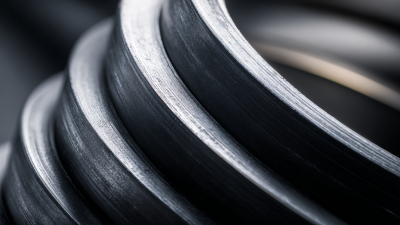
You know, FKM Terpolymer is really starting to make waves across different industries — and it's not hard to see why. This stuff has some seriously impressive properties. It’s super resistant to chemicals and can handle high temperatures without breaking a sweat. John Smith, who’s one of the top experts over at Polymer Innovations Inc., even said, “FKM Terpolymer is changing the game when it comes to high-heat applications.” That really highlights just how important this material is becoming in today’s manufacturing world.
As more companies jump on board with using FKM Terpolymer, it’s a good idea to look at all the ways it’s being applied. You’ll find it everywhere — in automotive seals, gaskets, fuel systems, you name it. Its ability to stand up against tough chemicals makes it a hit in sectors like aerospace and oil & gas, too. Of course, it’s not perfect — it can get pretty pricey, which might make smaller manufacturers think twice before using it.
Getting a good handle on both what makes FKM Terpolymer great and what its limits are is key if you want to use it effectively. The demand for this innovative material is definitely on the rise, but challenges like cost and how efficiently it can be produced still need some sorting out. Finding that balance is really going to shape how this material fits into different industries down the line.

What is FKM Terpolymer?
FKM terpolymer is a unique type of fluorinated rubber. It combines different monomers to create a versatile material. This blend enhances its resistance to heat, chemicals, and oil. As a result, FKM terpolymer is ideal for various industrial applications.
This material is commonly used in seals, gaskets, and O-rings. It withstands harsh environments, making it suitable for automotive and aerospace sectors. Manufacturers appreciate its durability and flexibility. However, production can be complex. Sometimes, achieving the right properties requires fine-tuning.
Moreover, while FKM terpolymer offers many benefits, it can be costly. Some industries hesitate to adopt it due to price concerns. Additionally, not every application requires such high performance. Balancing cost and functionality is always a challenge. The future of FKM terpolymer depends on resolving these issues and expanding its use.
The Chemistry Behind FKM Terpolymer
FKM terpolymer, a fluorine-based elastomer, is known for its exceptional
chemical resistance and thermal stability. The backbone of FKM terpolymer consists of a unique combination of
vinylidene fluoride, hexafluoropropylene, and tetrafluoroethylene.
This specific geometry leads to its versatility in various applications, making it suitable for demanding environments.
In industrial settings, FKM terpolymer is often selected for seals, gaskets, and O-rings. These components are
crucial in preventing leaks and ensuring reliability. The high resistance to
heat and chemicals makes these products ideal for the automotive and aerospace industries. Working under intense
conditions, they face degradation risks. Companies must ensure quality control to maintain
performance standards.
The chemistry behind FKM terpolymer is fascinating yet complex. The interactions between its monomers create
strong bonds, improving flexibility and durability. However, not all formulations achieve the desired properties.
Each application may require fine-tuning to optimize performance. This ongoing quest for perfection drives innovation
in material science, revealing both the potential and the
challenges in developing more advanced elastomers.
Manufacturing Process of FKM Terpolymer
The manufacturing process of FKM terpolymer involves several key steps. It starts with the careful selection of monomers. The primary components are fluoroethylene and propylene. Combining these elements leads to the formation of a structured polymer. This step must be precise to ensure quality.
Next, a polymerization reaction occurs. Typically, this is done in a solution to control viscosity. The reaction requires specific temperatures and pressures. Too high or too low can lead to inferior results. Following this, the mixture undergoes a process called curing. This hardens the polymer, enhancing its properties for future applications.
Finally, the terpolymer is analyzed for quality control. This ensures it meets desired specifications. Small variations in temperature, pressure, or time can affect the final product. Manufacturers often seek improvement in this stage. Despite careful monitoring, errors can still occur. Continuous improvement is essential for achieving top performance.
Key Properties of FKM Terpolymer
FKM terpolymer is a unique fluoropolymer known for its excellent properties. It combines the benefits of fluoroelastomers with enhanced performance traits. One key property is its exceptional resistance to heat. FKM terpolymer can withstand temperatures up to 250°C, making it suitable for high-temperature applications. Furthermore, it exhibits strong resistance to chemicals, oils, and solvents. This makes it a preferred choice in automotive and aerospace industries.
Another significant property is its low permeability. FKM terpolymer effectively prevents gas and fluid leakage. According to industry reports, this characteristic expands its applications in sealing technologies. Industries can utilize FKM terpolymer in gaskets, O-rings, and seals. These applications are critical in sectors like oil and gas, where reliability is paramount.
**Tip:** When selecting materials, consider the operating temperature and exposure to chemicals. Always align your material choice with environmental conditions.
Despite its advantages, FKM terpolymer has challenges. It can be more expensive than other elastomers. Also, it requires specialized processing techniques. Not all manufacturers are equipped to handle this material. Therefore, careful supplier selection is necessary to ensure quality and performance.
**Tip:** Compare costs and benefits of different polymers. A thorough analysis can save you money while ensuring quality in your projects.
Applications of FKM Terpolymer in Industry
FKM terpolymer is gaining attention in various industries for its unique properties. This advanced material is resistant to heat, chemicals, and weathering. Many sectors are integrating FKM terpolymer into their operations, enhancing product performance.
In the automotive industry, FKM terpolymer is widely used in gaskets and seals. A recent report indicated that the automotive segment accounts for over 30% of FKM applications globally. This is due to the material's durability in extreme environments. It can endure temperatures from -40°C to +250°C, significantly improving vehicle longevity. The reliability it offers aligns with industry trends focused on sustainability and efficiency.
Another notable application is in the aerospace sector. FKM terpolymer's lightweight and high-performance characteristics are vital for aircraft components. Research shows that fuel efficiency can improve by up to 15% when using these advanced materials. Yet, challenges remain. The high cost of production and limited availability can hinder broader adoption. Companies are now exploring ways to optimize manufacturing processes. Addressing these issues may unlock even greater potential for FKM terpolymer in various industrial applications.
Advantages and Limitations of FKM Terpolymer
FKM terpolymer is a unique rubber material known for its durability and resistance to chemicals. It excels in extreme temperatures and harsh environments. However, its advantages come with certain limitations. One key benefit is its exceptional resistance to oils and fuels, making it an ideal choice for automotive applications. Yet, this material can be more expensive compared to other elastomers.
Another advantage is its resistance to ozone and weathering. This makes FKM terpolymer suitable for outdoor applications. But, it may not be as flexible as other materials, leading to potential challenges in low-temperature settings. Users often find themselves weighing the cost against performance criteria.
**Tip:** Always consider the specific application requirements before selecting FKM terpolymer. Its unique properties can be beneficial but may need careful consideration of the environment in which it will be used. Testing prototypes is advisable.
In some cases, FKM might require additional processing to enhance its physical properties. While it offers excellent mechanical strength, achieving the desired performance can take time. Therefore, understanding the material's shortcomings is essential for appropriate use.
Future Trends in FKM Terpolymer Development
FKM terpolymer has gained traction in various industries due to its unique properties. It offers excellent resistance to heat, chemicals, and weathering. The demand for versatile materials pushes innovations in this field. Researchers focus on improving functionalities while reducing costs. This opens up new possibilities in fields such as automotive, aerospace, and industrial applications.
Looking forward, the future trends in FKM terpolymer development appear promising yet challenging. Sustainability remains a hot topic. Industry experts are exploring bio-based alternatives and eco-friendly production methods. The goal is to address environmental concerns while maintaining performance standards. Balancing quality and sustainability often feels daunting.
Another area of interest is smart materials. Incorporating sensors into FKM terpolymers can lead to advanced applications. This could enhance performance monitoring in real-time. However, integrating technology with traditional materials may require patience and further refinement. The journey ahead is filled with opportunities and obstacles that demand creative solutions.
FAQS
: The service aims to provide helpful information and support.
You can access the service online via a website or app.
Basic access is usually free, but some features may cost money.
You can reach support through the website's contact form or email.
Generally, you need an email address and a password to register.
Yes, the service is optimized for both mobile and desktop use.
Use the “forgot password” feature on the login page for help.
The service uses encryption to protect your personal information.
Sharing accounts is often discouraged and may lead to issues.
Report any problems to support, and they can assist you.
Conclusion
FKM terpolymer is a specialized synthetic rubber known for its exceptional resistance to heat, chemicals, and aging. The chemistry behind FKM terpolymer involves the polymerization of vinylidene fluoride, hexafluoropropylene, and tetrafluoroethylene, which results in a versatile material with enhanced properties. The manufacturing process typically involves emulsion or solution polymerization techniques, ensuring consistent quality and performance.
Key properties of FKM terpolymer include excellent mechanical strength, flexibility at low temperatures, and remarkable durability. These characteristics make it highly suitable for various industrial applications, such as seals, gaskets, and O-rings, particularly in automotive and aerospace sectors. While FKM terpolymer offers numerous advantages, such as chemical stability and temperature resistance, it also has limitations, including higher production costs compared to traditional rubbers. Looking ahead, ongoing research and development in FKM terpolymer are expected to focus on improving its properties and broadening its applications in advanced technology sectors.