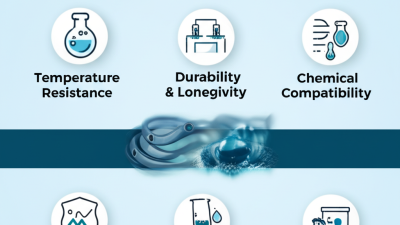
You know, Fluoroelastomer Viton really stands out when it comes to industrial materials. Its super tough chemical resistance makes it a must-have for all sorts of applications. I read somewhere that, according to Smithers Pira, the global market for fluoroelastomers is expected to hit around $1.5 billion by 2025. That's pretty crazy, right? It totally makes sense though—there’s a growing need for high-performance materials in the auto and aerospace industries, after all.
Dr. Emily Harrison, who’s a real expert in polymer science, recently emphasized just how crucial Viton is these days. She mentioned, “Opting for Fluoroelastomer Viton means you’re getting something that’s durable and reliable—even under the most extreme conditions.” That really sheds light on why companies tend to choose Viton over other elastomers.
Now, I won’t lie — some businesses do hesitate because it’s not exactly cheap. But honestly, the long-term savings and benefits usually outweigh the initial cost. Companies using Viton often see lower maintenance bills and smoother, more efficient production processes. When you think about it, finding that sweet spot between cost and performance is kind of a game-changer in today’s fiercely competitive market.
Fluoroelastomers, particularly Viton, offer unique properties that make them ideal for industrial applications. They provide excellent resistance to extreme temperatures, chemicals, and UV exposure. A study from the American Chemical Society highlighted that such materials can withstand temperatures ranging from -20°F to Aerospace applications indicate that these elastomers retain their integrity even in aggressive environments. This durability is crucial for parts in automotive and aerospace sectors.
Moreover, fluoroelastomers demonstrate low compression set, making them reliable for sealing applications. According to a report by MarketsandMarkets, the demand for fluoroelastomers will grow to $2.3 billion by 2027. This growth is driven by their unique attributes such as chemical inertness and high performance. However, some industries might struggle with the initial costs involved in their application.
While the advantages are compelling, it’s important to approach fluoroelastomers with realistic expectations. Poor installation can lead to premature failure, overshadowing the material's benefits. Assessing environmental compatibility and specific application conditions is crucial. This careful analysis ensures that the benefits of fluoroelastomers are fully realized.
Fluoroelastomers, particularly Viton, are known for their unique composition and structure. This polymer typically contains a high percentage of fluorine, which enhances its chemical resistance and thermal stability. A study by the Chemical Manufacturers Association noted that these materials can withstand temperatures up to 200°C. The molecular structure includes a backbone of carbon and fluorine atoms, resulting in exceptional resilience against aggressive chemicals and solvents.
The versatility of Viton makes it suitable for diverse industrial applications. Its excellent sealing properties help prevent leaks in harsh environments. According to a report by Freedonia Group, the demand for fluoroelastomers is expected to grow by 5% annually, driven by their usage in automotive and aerospace industries. However, using Viton isn't without challenges. Some formulations may lack flexibility at lower temperatures, which requires careful selection based on operational conditions. This means engineers must weigh benefits against potential limitations.
Understanding the specific composition and structural characteristics of Viton can simplify material selection. The different grades of Viton offer varying levels of performance and resistance. Each grade serves tailored applications, yet not every grade suits every scenario. Utilizing the right type can prevent costly downtime and maintenance issues, making informed choices essential for industrial efficiency.
Fluoroelastomer Viton is a popular choice in various industrial applications. Its unique properties provide many key advantages.
One of the standout features is its exceptional resistance to extreme temperatures. Viton can withstand temperatures ranging from -20°C to 250°C.
This range makes it suitable for harsh environments, such as oil and gas, chemical processing, and automotive industries.
Another important advantage is its chemical resistance. Viton performs well against acids, fuels, and solvents.
This quality helps maintain integrity under challenging conditions. In industries where contact with aggressive substances is common, this reliability is crucial.
Additionally, Viton’s durability and flexibility stand out. It retains its shape and functionality, even after prolonged exposure.
Users do note some challenges. Viton products can be more expensive than alternatives.
Cost considerations should factor into decision-making. It’s essential to evaluate specific project needs and long-term benefits.
Understanding both advantages and limitations leads to informed choices.
Choosing Viton may involve balancing benefits with budget constraints, but the protection it offers often justifies the investment.
Fluoroelastomer Viton is a valuable material widely used across various industries. Its unique properties make it ideal for demanding applications. Viton is resistant to extreme temperatures, chemical corrosion, and physical wear. These traits ensure its effectiveness in harsh environments.
In the automotive sector, Viton is often used in seals and gaskets. These components help prevent leaks and maintain optimal performance. Similarly, in the aerospace industry, Viton serves in fuel systems and hydraulic applications, where reliability is crucial. Its ability to withstand high pressure and chemical exposure is indispensable for safety.
**Tip:** When selecting materials for applications, consider operational conditions. Viton's characteristics may not be necessary for less demanding environments.
In the pharmaceutical industry, Viton finds its place in processing equipment. The material's inertness ensures product purity. Similarly, in the oil and gas sector, it is used in valves and pumps. The longevity and durability of Viton components reduce maintenance needs, ultimately saving time and costs.
**Tip:** Assess long-term costs of materials. Investing in Viton for critical components may lower overall expenses through durability.
Overall, Viton proves its worth in diverse fields. Its specialized properties address challenging requirements, ensuring operational efficiency.
| Industry | Application | Temperature Resistance (°C) | Chemical Resistance |
|---|---|---|---|
| Automotive | Fuel system seals | -40 to 200 | Fuel, oil, and heat |
| Aerospace | O-rings and gaskets | -20 to 300 | Aviation fuels, hydraulic fluids |
| Pharmaceutical | Pumps and seals | -15 to 200 | Acids, solvents |
| Chemical Processing | Sealants and valves | -10 to 250 | Acids, alkalis, halogens |
| Food & Beverage | Conveying systems | -30 to 200 | Food grade chemicals |
When selecting an elastomer for industrial applications, performance is key. Fluoroelastomer Viton stands out due to its exceptional resistance to chemicals and heat. In comparison to other elastomers, such as nitrile or neoprene, Viton offers superior durability in extreme conditions. It retains its elasticity in high temperatures and resists degradation from harsh chemicals. This is critical for industries like aerospace and automotive.
However, not every application may benefit from Viton. Its cost can be a factor. In applications where budget constraints are tight, other elastomers might be more suitable. For instance, nitrile works well with oils and fuels but falls short under UV exposure. Viton excels in those conditions but may not always be necessary.
Choosing the right elastomer requires balancing performance with cost. Understanding the unique properties of each material aids in making an informed decision. It’s essential to assess environmental factors and application needs. This thoughtful approach can lead to more sustainable and efficient industrial processes.
When working with Viton products, proper handling and maintenance are crucial for prolonging their life. Keep these elastomers in a cool, dry place. High temperatures can degrade their material properties. Store them away from direct sunlight, as UV exposure can lead to premature failure. Ensure that storage conditions are optimal to maintain performance.
Cleaning Viton components is also essential. Use a mild soap and water solution for cleaning. Avoid harsh chemicals that could damage the surface. After cleaning, make sure to thoroughly dry the components. Any residual moisture can lead to issues. Inspect the gaskets and seals regularly for signs of wear. Look for cracks or deformation, as these can indicate that the product is nearing the end of its lifespan.
When installing Viton products, ensure they are fitted correctly. Misalignment can result in leaks, which may compromise your operation. Use proper tools to avoid unnecessary force during installation. If you notice difficulty during installation, reassess the alignment. Regular inspections and thoughtful handling can significantly enhance the durability of Viton products, yet many overlook these simple practices.
Fluoroelastomers, such as Viton, are gaining traction in many industries. Companies adopt these materials due to their excellent resistance to chemicals and extreme temperatures. Innovations in fluoroelastomer technology show promise for improved performance. Researchers are exploring ways to enhance elasticity and durability further.
One emerging trend involves the integration of sustainable practices. Biobased fillers and recycling methods are being developed. These advancements can reduce environmental impact. However, there are challenges. Balancing sustainability with performance is not simple. Companies need to address how to maintain the quality while being eco-conscious.
Moreover, as industries evolve, the demand for specialized applications increases. Custom formulations of fluoroelastomers may become prevalent. Industries, like automotive and aerospace, will require tailored solutions. This shift indicates a potential learning curve. Understanding these unique requirements will be essential for manufacturers. Future developments will likely necessitate ongoing research and client feedback.
The market potential for bishphenol curable fluoroelastomer copolymers is gaining significant attention, particularly given the growing demand for high-performance materials across various industries. These advanced materials combine the excellent chemical resistance and thermal stability of fluoroelastomers with the versatility of curable formulations. Insights from the latest industry reports reveal a strong trend towards customization, allowing manufacturers to tailor their products to meet specific requirements related to color and hardness.
Fluoroelastomer precompounds represent a key innovation in this domain, as they facilitate the mixing of fluoroelastomer base polymers and crosslinkers to achieve desired properties. This adaptability is crucial for industries that require precise material specifications while adhering to stringent environmental standards. The products are not only Reach certified and RoHS certified, but they are also free from harmful substances such as PFOA and PFAS, making them a responsible choice for companies committed to sustainability. With a shelf life of two years, these precompounds offer both performance and practicality, ensuring that customers can rely on them for their critical applications.
: Fluoroelastomers are known for their resistance to extreme temperatures and harsh chemicals.
They maintain integrity even in aggressive environments, crucial for automotive and aerospace applications.
Poor installation can cause early failure, which may negate their advantages in certain applications.
Initial costs can be high, leading some to prefer other, less expensive elastomers.
Balancing performance with cost is essential for making informed decisions in applications.
Yes, there's a growing interest in sustainable practices and custom formulations for specific applications.
By using biobased fillers and improving recycling methods, companies can lessen their environmental footprint.
The automotive and aerospace industries particularly benefit from their superior chemical and temperature resistance.
Ongoing research and feedback will be necessary to address evolving industry needs and performance demands.
They must balance performance with sustainability to maintain quality while minimizing environmental impact.
Fluoroelastomer Viton is a highly specialized material known for its exceptional chemical resistance and thermal stability, making it ideal for demanding industrial applications. Composed of unique fluorine-based polymers, Viton exhibits superior properties such as low permeability, resilience under extreme temperatures, and resistance to aggressive chemicals. These characteristics position Fluoroelastomer Viton as a preferred choice across various industries, including automotive, aerospace, and chemical processing.
The advantages of using Viton extend beyond its performance, as it also offers reliability and durability in challenging environments. Proper maintenance and handling are crucial for maximizing the lifespan of Viton products, ensuring they maintain their integrity and functionality. As technology continues to evolve, the future trends in fluoroelastomer usage are likely to expand, promising even greater innovations in performance and application versatility.